
Subscribe and receive email notifications of new blog posts.
 RSS Feed
- 2026 | 97 Posts
- 2025 | 102 Posts
- 2024 | 110 Posts
- 2023 | 72 Posts
- 2022 | 52 Posts
- 2021 | 70 Posts
- 2020 | 84 Posts
- 2019 | 38 Posts
- 2018 | 48 Posts
- 2017 | 39 Posts
- 2016 | 31 Posts
- 2015 | 10 Posts
10
Jefferson Park in Early Fall: Beauty and Renewal Along the Whitewater Trail
Jefferson Park in Early Fall: Beauty and Renewal Along the Whitewater Trail
Some hikes are memorable because the trail leads to a beautiful destination. Others stay with us because the landscape tells a much larger story. Our September 8, 2026 hike to Jefferson Park from the Whitewater Trailhead offered both.
We have hiked to Jefferson Park several times over the years, including before and after the fires that dramatically changed this part of the Mt. Jefferson Wilderness. Our earlier visit, shared in Jefferson Park Hike Open and Spectacular, captured the excitement of returning after the trail had been closed for several years. Each return visit is a reminder that the trail we once knew is gone in many places, but the beauty of Jefferson Park remains—and the forest is slowly beginning its long recovery.
Our hike measured 13 miles with 1,920 feet of elevation gain. The day was stunning, with a clear blue sky, comfortable early-September weather and remarkably few people on the trail.
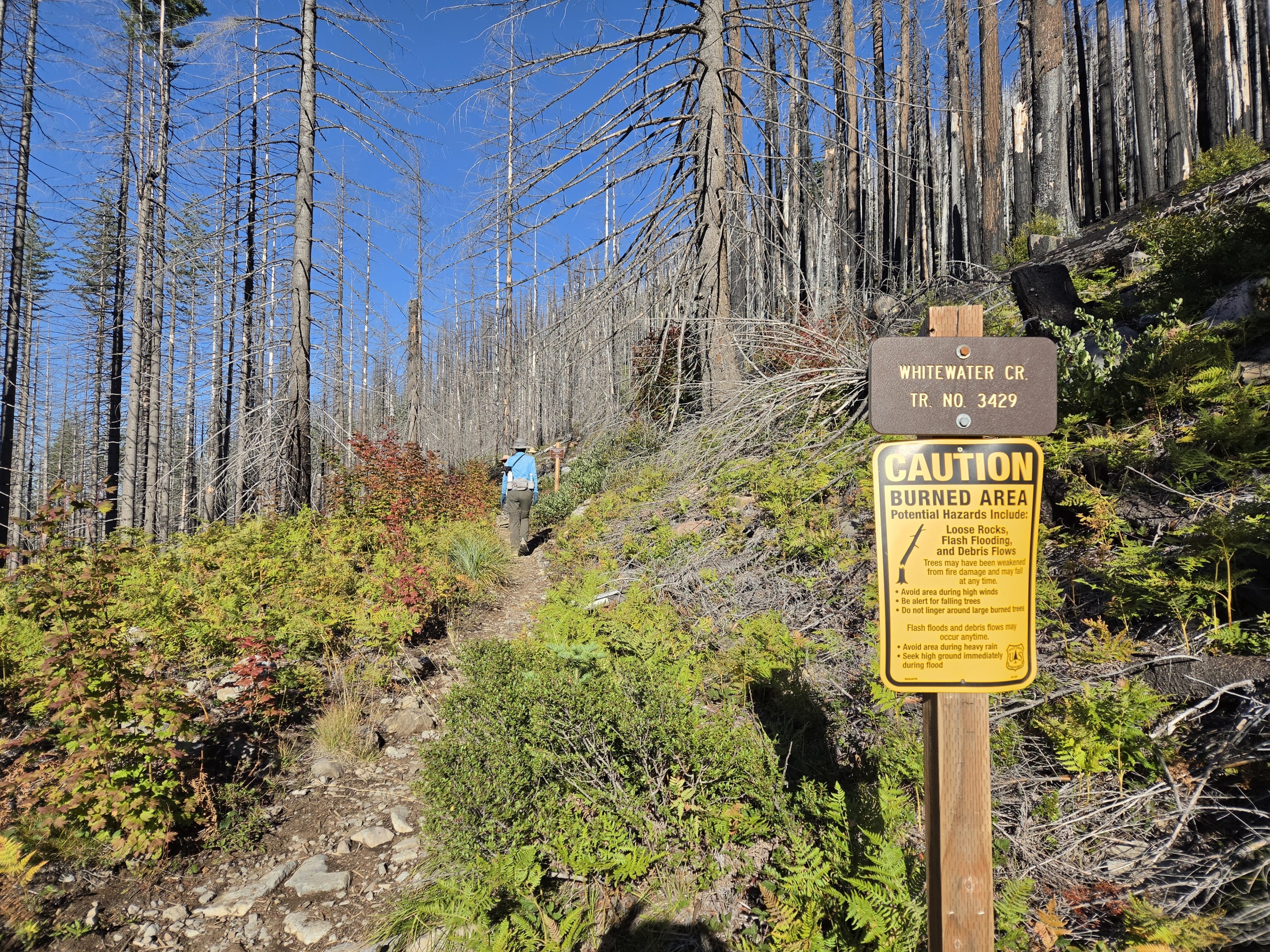
Hiking Through a Forest Changed by Fire
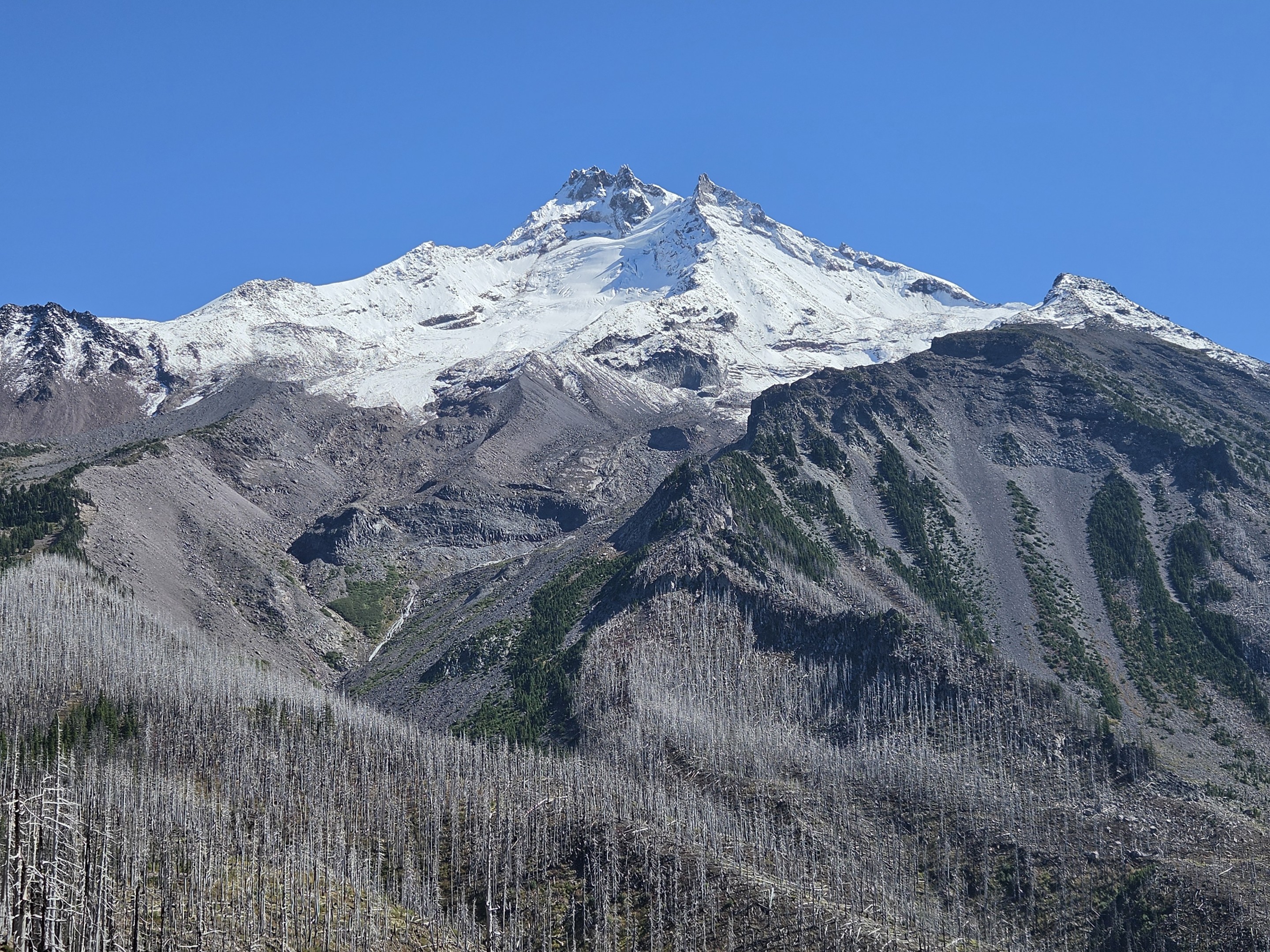
The effects of wildfire become apparent almost immediately after leaving the Whitewater Trailhead. Tall blackened trunks cover hillsides that were once heavily forested, opening views that did not exist before the fires.
The lightning-caused Whitewater Fire burned through this area in 2017, eventually covering roughly 14,500 acres. Only three years later, the much larger Lionshead Fire swept across a broad section of the Mt. Jefferson Wilderness during Oregon's devastating 2020 fire season. Together, the fires substantially changed the Whitewater Trail and the forests surrounding Jefferson Park. (Whitewater Fire background, Santiam fire complex background)
There is no getting around the damage. Miles of the route now pass through exposed burned forest, and the loss of mature trees can make the hike feel warmer and less sheltered than it once did. Dead trees also remain an ongoing hazard, especially during wind or following storms.
Still, the landscape is not lifeless. Young trees, shrubs, grasses and wildflowers are returning beneath the standing snags. In early September, areas along the trail were beginning to take on fall color, with deep reds and touches of gold spreading across the ground. Against the blackened trunks, the new growth was especially vivid.
When we made this same journey in 2025, we wrote about how Jefferson Park remained beautiful despite the fires. Returning a year later gave us another opportunity to see how the recovering landscape continues to change.
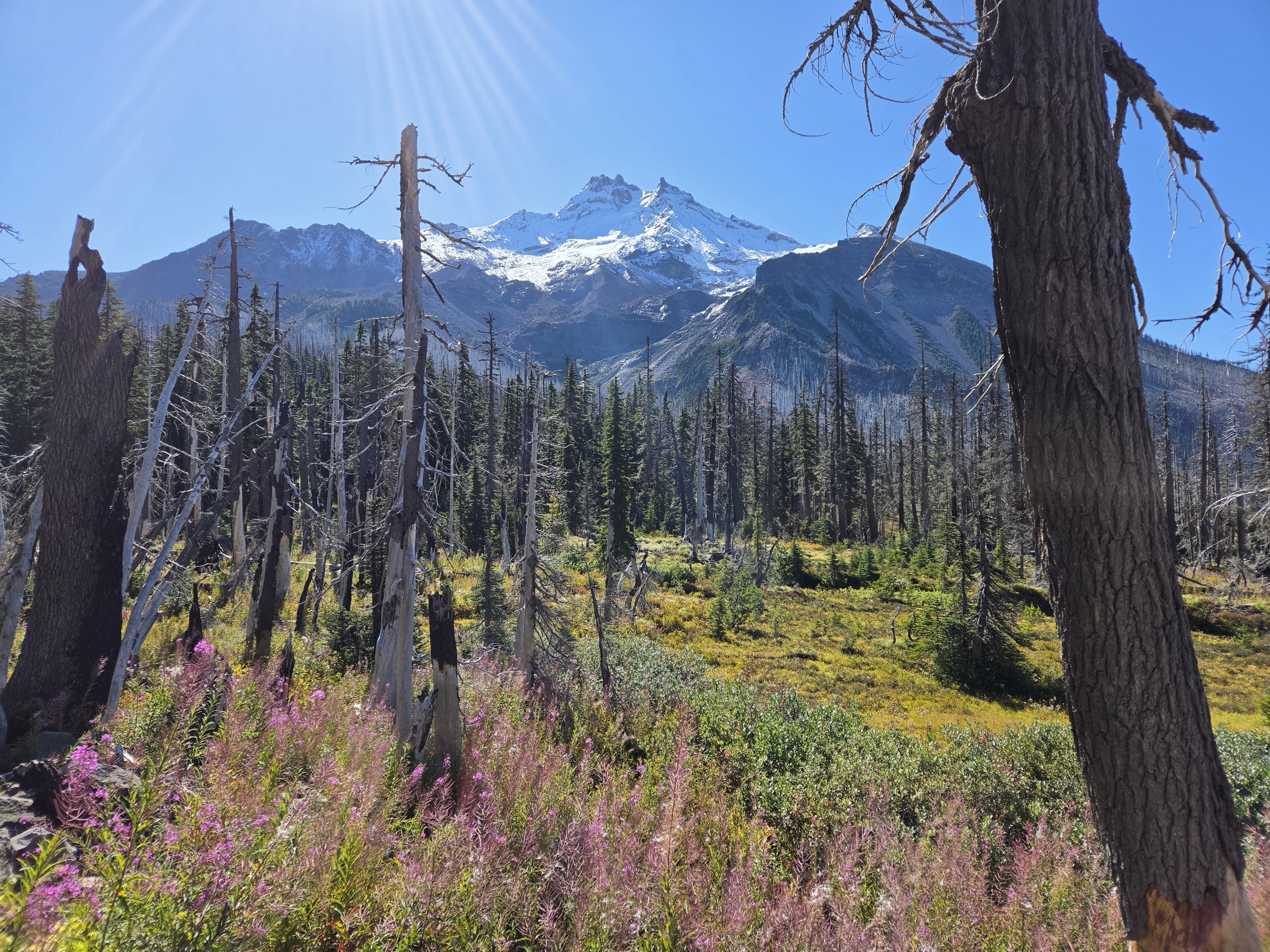
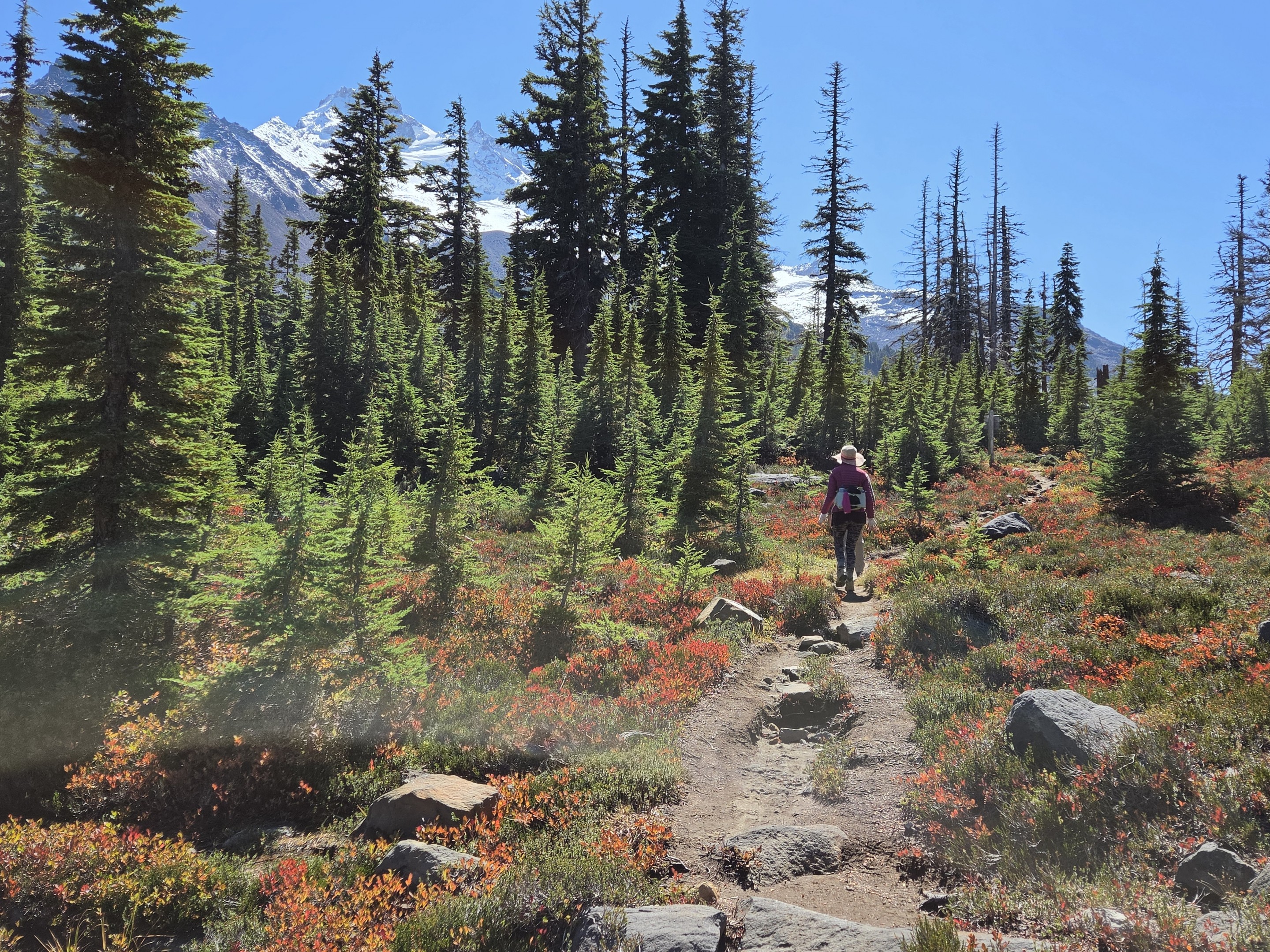
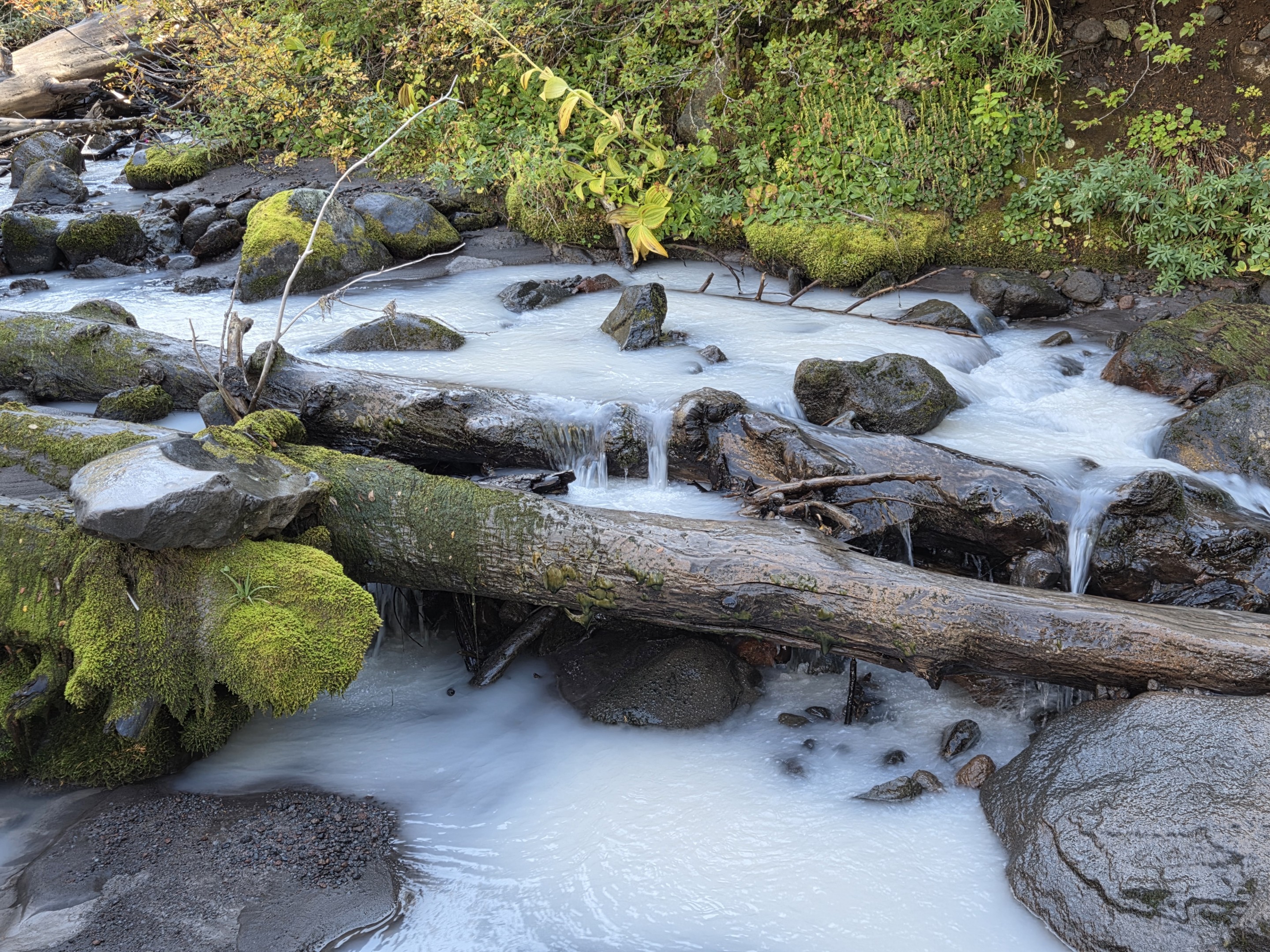
Whitewater Creek Brings Life to the Burned Landscape
Whitewater Creek provides a welcome change from the open burn area. Its cold, fast-moving water winds through rocks, fallen logs and green vegetation, creating one of the most refreshing sections of the hike.
The sound of the creek and the abundance of growth beside it make this portion of the route feel particularly alive. It is also a reminder that recovery does not happen evenly. Some areas remain stark and exposed, while others are already filling in with dense vegetation.
As the trail climbs, Mt. Jefferson begin to appear through the burned forest. These views are striking in a different way than they were before the fires. The mountain now rises above hillsides of silver and black trunks, making the scale of both the peak and the fire damage difficult to ignore. For another perspective on this remarkable mountain, see our hike from Pamelia Lake toward Grizzly Peak.
Entering Jefferson Park
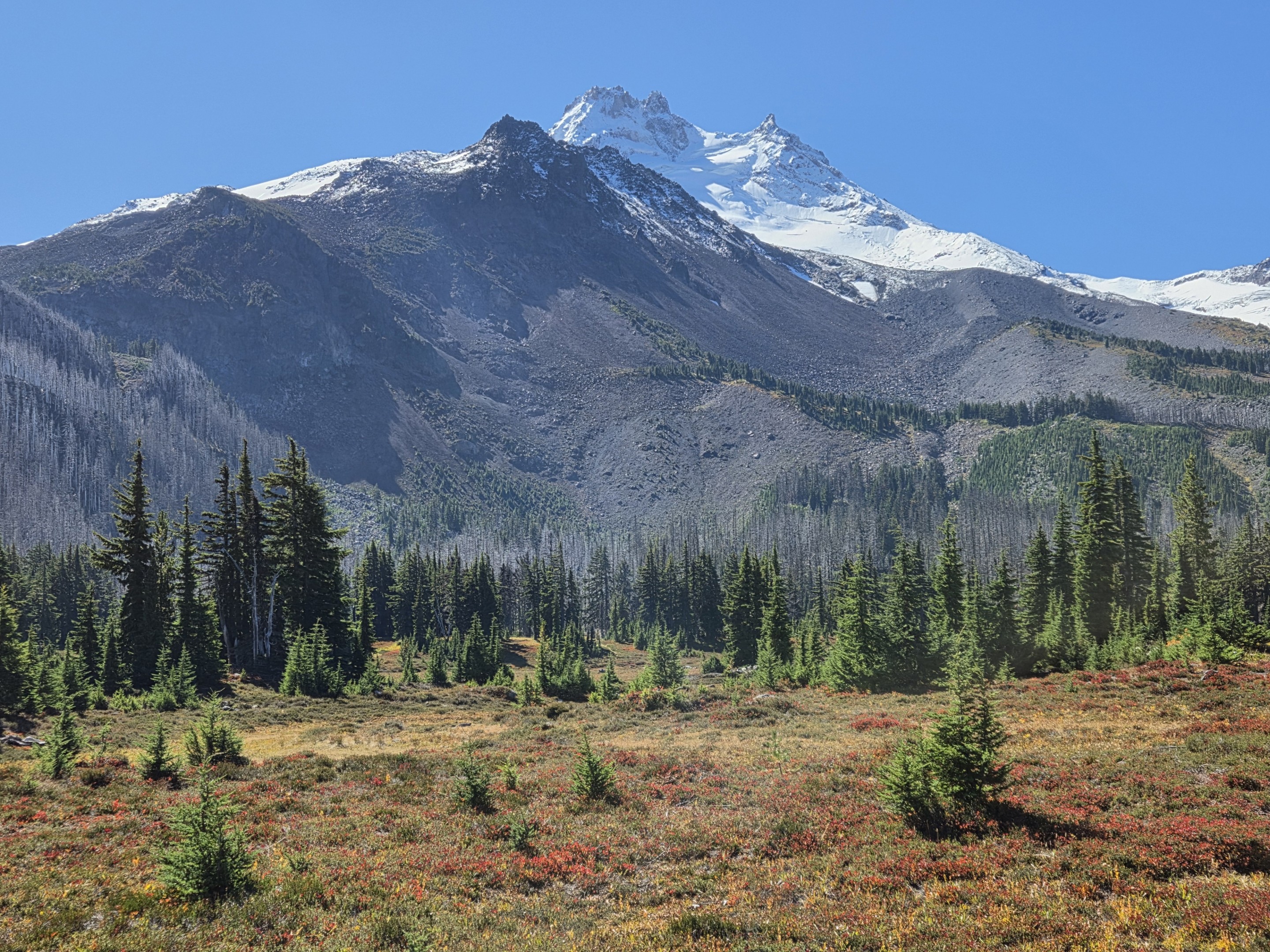
The character of the hike changes as the Whitewater Trail approaches the Pacific Crest Trail and Jefferson Park. Living trees become more numerous, the ground opens into meadow and Mt. Jefferson begins to dominate the landscape.
By early September, the brilliant summer wildflower season has largely passed, but the meadows have their own quiet fall beauty. The vegetation turns shades of yellow, rust and red, while the mountain still holds snow and ice high above the park.
After walking for miles through burned forest, arriving in Jefferson Park feels especially meaningful. The fires changed much of the journey, but they did not take away the grandeur of the destination.
Lakes and Ponds Beneath Mt. Jefferson
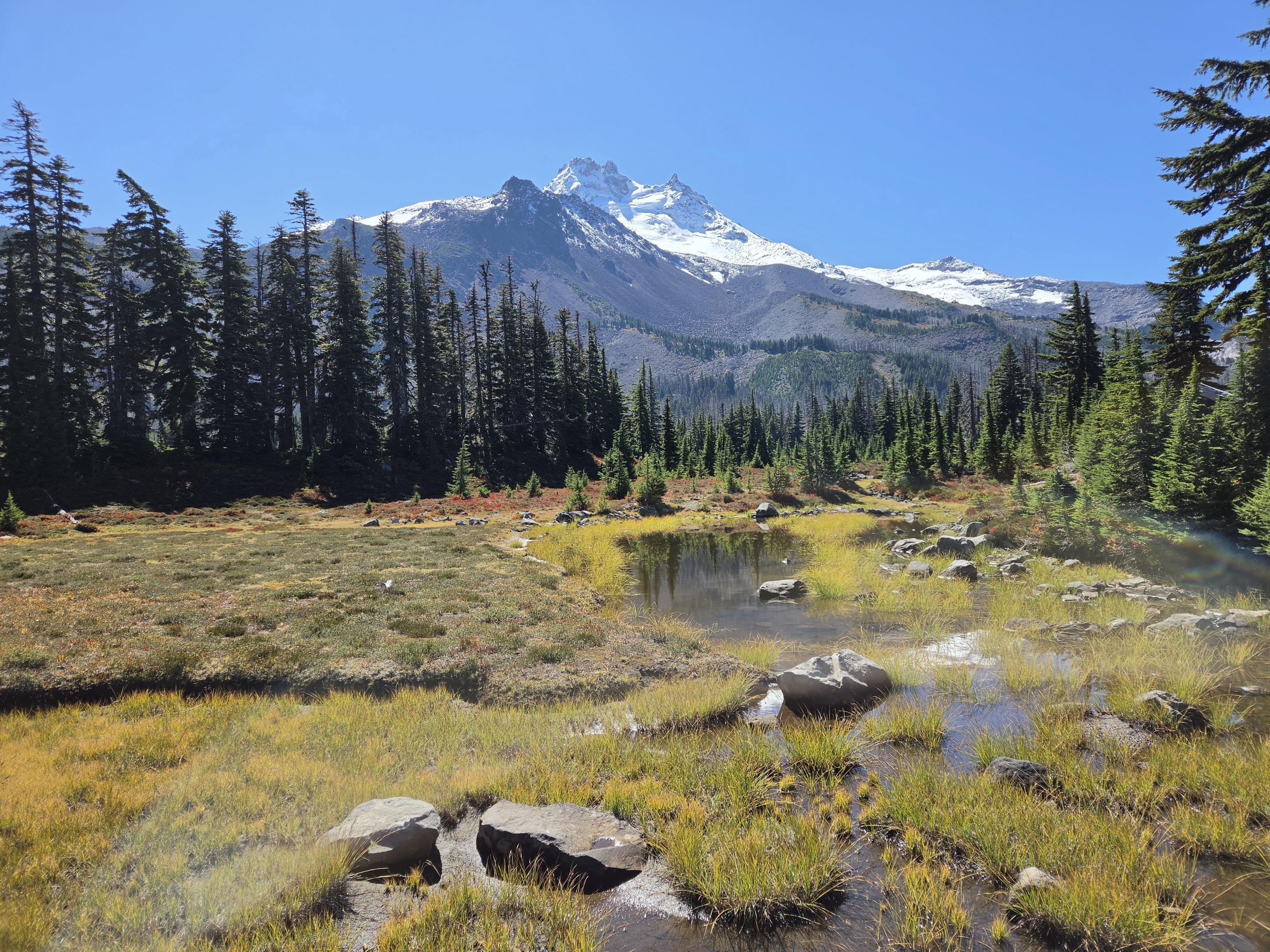
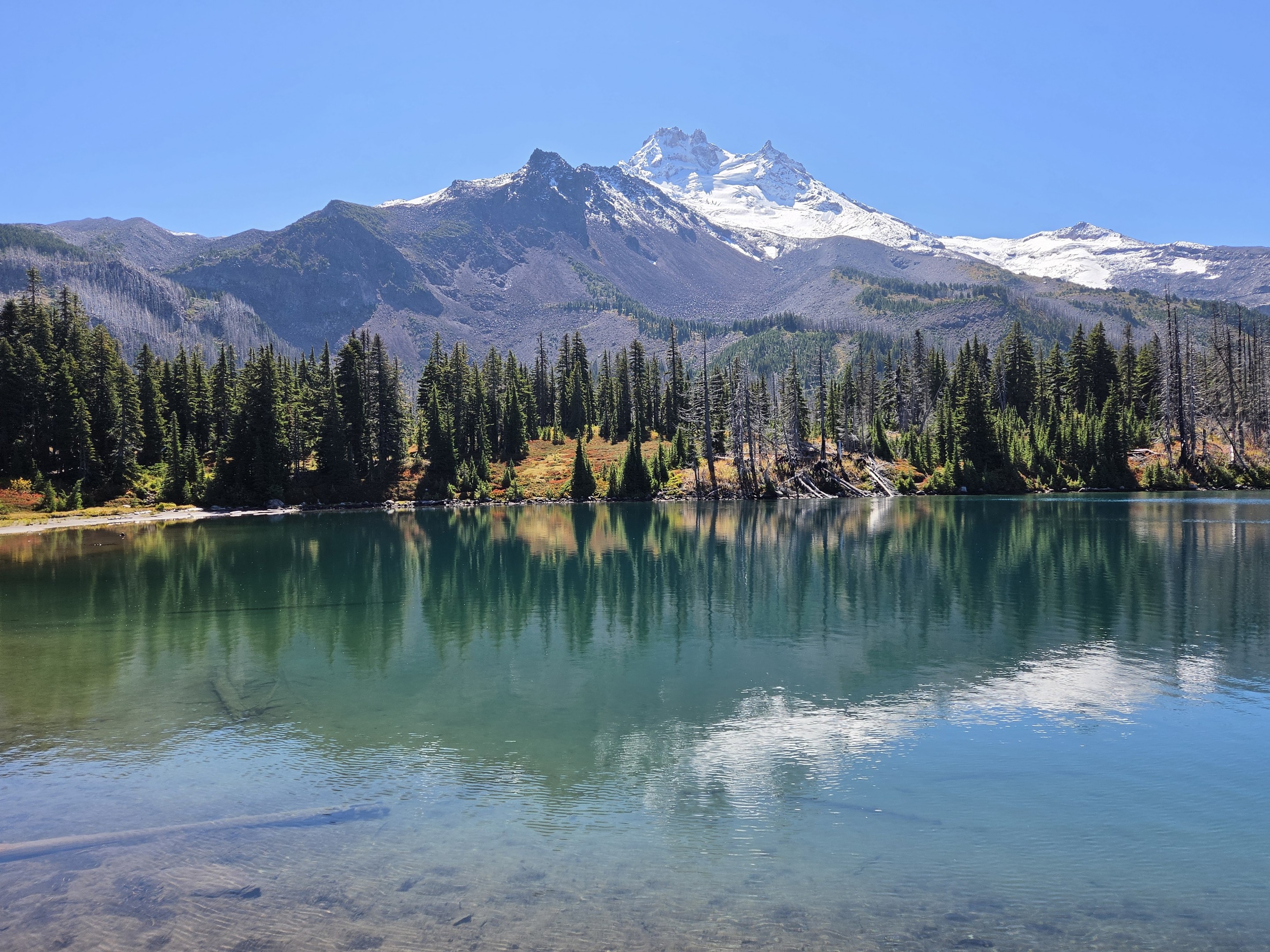
One of the pleasures of Jefferson Park is exploring its collection of alpine lakes, ponds and meadows rather than simply reaching one turnaround point. On this trip, the water was exceptionally clear and calm, with Mt. Jefferson reflected in several of the smaller ponds.
Even the shallow ponds added to the beauty of the park. Surrounded by early fall vegetation and scattered stands of surviving trees, they provided some of the best views of the day.
We also visited Bay Lake, Scout Lake and Russell Lake. Each has its own character. Bay Lake is framed by rocky slopes and small islands of evergreens, while Scott Lake's remarkably blue water stands out against the fire-affected forest surrounding it.
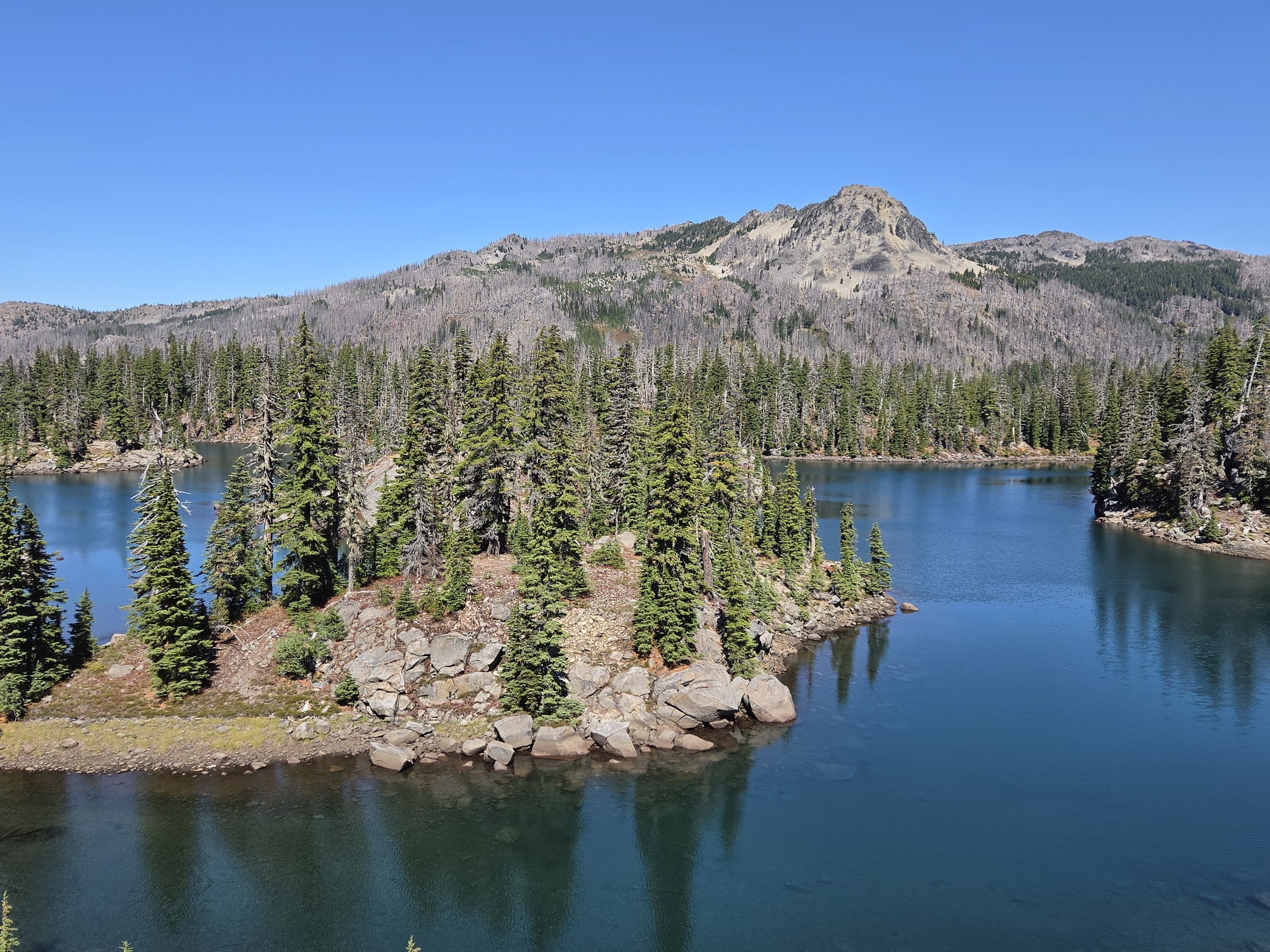
Russell Lake remains one of the most beautiful locations in Jefferson Park. The lake's clear blue-green water, the surviving trees along its shore and Mt. Jefferson rising behind it create the classic view people associate with this special wilderness basin.
A Different Jefferson Park, but Still a Remarkable One
It would be easy to look at the burned hillsides and focus only on what has been lost. Anyone who hiked the Whitewater Trail before the fires will remember a much more heavily forested route. That forest will not return to its former appearance in our lifetimes.
But hiking the trail now offers something different: an opportunity to watch a wilderness landscape begin again. New plants are spreading across the forest floor. Young trees are becoming established. Whitewater Creek continues to move through the mountains, and the lakes and meadows of Jefferson Park remain beautiful beneath Oregon's second-highest peak.
Our September hike could hardly have offered a better day. We had clear skies, exceptional mountain views and surprisingly few people sharing the trail. At 13 miles, this remains a substantial day hike, but Jefferson Park is worth the effort.
The route has been changed by fire, and it will continue changing for decades. Jefferson Park remains one of our favorite great Oregon hikes, and one we feel fortunate to revisit. Access to places like Jefferson Park is one of the many reasons we love living in Central Oregon.